
The story of a girl no one could help. Until someone did.
The reasons why children are admitted to the Mbigili Children’s Village vary greatly. But one thing they all have in common is this: they cannot grow up in their birth families and therefore find a new, protected home in the children’s village.
One of these children is Sara. We call her Sara in this story to protect her identity.
Sara suffers from Type 1 diabetes, a chronic disease in which the pancreas no longer produces insulin. Insulin, however, is vital. It ensures the body can absorb carbohydrates and regulate blood sugar levels. Without proper treatment, blood sugar rises permanently, causing severe complications and infections. By the time Sara arrived at the children’s village, this had already happened.
She was physically very weakened, severely underweight, and already suffering from multiple infections caused by the disease. Before her arrival, she lived with her grandmother in a village several hours away from the children’s village. Some time earlier, she had been diagnosed with diabetes at the hospital in Ilula, a nearby town. At first, the treatment worked well, but the prospect of lifelong insulin therapy increasingly overwhelmed her grandmother. Sara’s condition worsened until the hospital social worker got involved. She established contact with the children’s village, and so Sara’s new chapter began.
The first weeks at the children’s village were a challenge for everyone. Sara was very quiet, reserved, socially withdrawn, and struggled to adjust to the new environment. At the same time, the housemothers had to learn how to manage her illness properly – because insulin therapy in Tanzania differs greatly from care in countries like Germany. Where insulin pumps or pens make daily life easier there, the therapy means: two fixed insulin injections daily, a strict diet with controlled carbohydrate intake, regular blood sugar measurements, and immediate reactions to values outside the target range.
For the whole team at the children’s village, this meant learning, taking responsibility, and thinking ahead. The housemothers, especially those working in the kitchen, learned new recipes without sugar but full of nutrients. A handful of housemothers were trained on how to measure blood sugar, dose insulin correctly, and inject it. Step by step, routines developed and so did Sara’s condition.
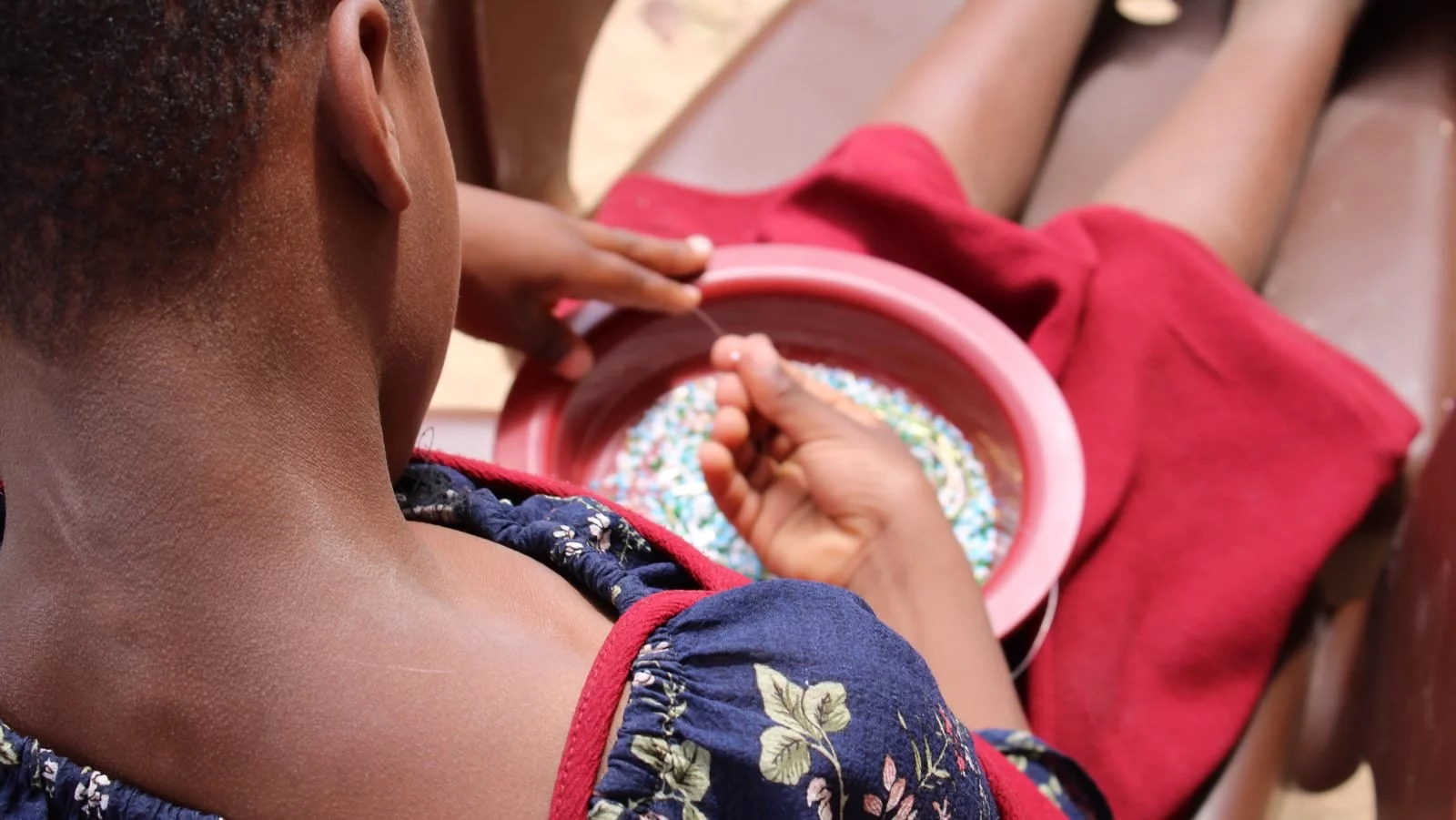
Today, there is no sign left of the frail, withdrawn girl. Sara has found friends to play with in the afternoons, laugh, and be creative. She especially loves making beaded bracelets. Proudly, she waters the flowers in front of the children’s houses with a watering can, carrying it naturally through the garden. She dances enthusiastically in class, bringing energy and joy. And she talks excitedly about her favorite school subjects, which she has been attending again since May. Above all, she laughs a lot because she has regained her childhood, which is no longer primarily defined by her illness and physical condition.
What Sara shows today is much more than physical strength: it is joy of life. And that is exactly what the children’s village is about: giving children the chance to be children!